Topic Chosen
Modern Cell Phones (Blackberrys) create dependence in teenagers and hinder communication with other individuals.

-----------------------------------------------------------------------------------------------
Introduction
Out of the three possible topics that I have presented earlier I decided to choose and develop my second idea; the idea of the cell phones. I chose to do this because it was the impact of media that I liked the most since I myself have been in the situation where I feel dependent of my blackberry.
Through this idea I am certain that I will discover how great the effect of media is upon my society, and especially how much it might influence the life of a teenager on a negative perspective.
-----------------------------------------------------------------------------------------------
Piece of Evidence #1
After I had chosen the idea I wanted to focus on for my Opinion Editorial article I researched about it into more depth. Here is an interesting piece of information that I found in relation to my topic.
SOURCE:
http://www.aboutourkids.org/articles/antisocial_networking_how_do_texting_social_media_affect_our_children_panel_discussion_csc_
How much are kids using media?
- The total amount of media use by youth ages 8 to 18 averages 6-plus hours a day—more than any other activity.
- The amount of use has increased significantly, up from 4-plus hours in the last five years.
- Eighty percent of adolescents possess at least one form of media access.
- There is extensive multi-tasking associated with media use (instant messaging while doing homework and listening to music on an mp3 player, for example).
- Of particular concern is the amount of TV kids consume. From 2004 to 2009, television and video use averaged three to five hours per day, peaking between the ages of 11 and 14, a crucial period for kids' social development.
- Fifty-four percent of teens send text messages, and one third of teens send more than 100 text messages per day.
- One third talk face-to-face with friends, around the same percentage that talk on cell phones (38 percent) and land lines (30 percent).
- Twenty-four percent communicate with friends via instant messages.
- Twenty-five percent contact friends via social networking sites.
- Eleven percent use e-mail
Comment
The post seen above is an extract from the website stated in the source section. It talks about how media is an inherent part of the lives of children between ages 8-18 and how as media develops, the use of it in teenagers augments as well. Although the bullets talk more about the impact of TV and video ames, there is a short fragment that deals with cellular use and texting stating that "more than 100 text messages" are sent per day by teenagers.
This shows how the use of mass media, cell phones especially, have become a big issue that needs to be desperately taken into consideration because it is causing children to become dependent of them, and dependence eventually, in my opinion, leads to addiction.

-----------------------------------------------------------------------------------------------
Piece of Evidence #2
Comment
The video shown above is a second piece of evidence that I found when researching about the impact of cell phones on teenagers. Although it does not quite focus on either blackberries or iPhones, this video is a commercial for a Windows Smartphone that has been recently released. It is an advertisement with no sound that shows the different properties of this cell phone and illustrates it as something that will eventually become necessary for a living.
However there is a section in the video where the family gets together to explore this new gadget and they never talk between themselves. It is clear that all the attention is around the new object and there is not a single movement that indicates that a family conversation will start even if the theme is the new smartphone version.
 This shows the degree of influence that cellphones have: they hinder communication, and if the communication is over between a mother, father and two small children imagine how this can impact the lives of teenagers who, by nature, try to spend the least possible time with their parents because they are not "cool" enough.
 At the end of the article I found a series of comments that expressed opinions in relation to what the video had shared about the future and there was a particular one that struck me with what it said. The comment was the following:
If thats what families become like... there is no hope
maarkryaan il y a 3 mois 26 
This illustrates the feeling of awareness that some people already have about the effect that mass media communication tools like cellphones can have upon families, converting them into something with no intimate relationships between individuals as it should.
-----------------------------------------------------------------------------------------------
Piece of Evidence #3
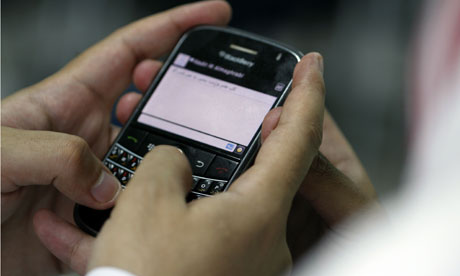
A third piece of evidence that I found in relation to my topic was an article from The Guardian Magazine written by a girl, Megan Smith, which talked about some of the reasons for why Blackberrys have become so popular amongst teenagers.
However, there were some sections of this article that I found rather important because they illustrated what is the effect of blackberries on young populations like teenagers. The sections were the following:
"As a 19 year old, a BlackBerry appealed to me for many reasons. First things first; my friends had one. Having a BlackBerry is something of a craze and us teens like to follow suit."
"Friends have started to refer to their BlackBerrys as their 'babies' and some even sleep with them under their pillow. I'm ashamed to admit I feel a little lost without mine which is why I'm BlackBerry through and through."
These two article sections showed how vulnerable teenagers are when using mass media communication devices like Blackberrys. For instance, the first quote shares the opinion of how a young woman decided to buy a Blackberry because her friends had one, illustrating how teenagers tend to follow "the trend." In addition, the second quote of the article shows the degree of impact that blackberries have upon teenager. This girls states how some of her friends call their Blackberrys "babies" and "sleep with them under their pillow" depicting complete dependence to the phone. Then, the sentence proceed with a confession from her part where she states that she "sometimes feels lost" without her phone, highlighting how modern cellular devices tend to be addictive.

If we put these pieces of information into perspective, we can see that it is undeniable that Blackberrys impact the way teenagers lead their life. They hinder their independence and up to some point make teenagers their slaves, causing them to feel incomplete without the presence of an electronic device.
These are the types of ideas that I want to explore in my Opinion Editorial article.
ARTICLE SOURCE:
http://www.guardian.co.uk/technology/2010/aug/02/blackberry-iphone-sales-technology
-----------------------------------------------------------------------------------------------
Piece of Evidence #4
This fourth piece of evidence that I found regarding the impact of cell phones upon teenagers was also an article. However, this article came from The Source for Youth Ministry and it was written by David R. Smith.
 The article focuses on both the pros and cons of teenagers that possess a phone and it explains that while cell phones are an important part of communication and the door to access various parts of the world they can also cause addiction and a poor performance in the environment were teenagers develop.
In order to back up the information presented above here is an excerpt from the article that refers to the ideas discussed in more detail. The article is the following:
Cell phones give teenagers round-the-clock access to their friends and the world. They also provide teens with in-pocket, on-demand entertainment. Many kids say they can’t live without them.
But how is 24-hour connectivity truly affecting our teens?
Sweet and Sour
Cell phone use by kids today is a lot like the chicken at my favorite Chinese restaurant: sweet and sour.
Yes, there’s plenty of “sweet” that comes with owning and using a cell phone, for instance, teens hail the sense of connectivity and safety the devices provide them. On the more vain side of things, cell phones have also become THE way for teens to impress their friends. Finally, there’s the hope that cell phones will help bridge gaps between parents and kids.
But there is also a lot of “sour” that stems from teens’ misuse of cell phones. Educators have recently begun to realize the proclivity students have for using their mobile phones to cheat. No doubt, all of us have witnessed teenagers who are texting while driving… that is, if we look up from our own phones in traffic. And of course, there’s the whole sexting phenomenon, too.
And now, researchers are figuring the overuse of cell phones as a major player in chronic sleep lossamongst teens. Teens who forego sleep so they can text into the twilight hours are more susceptible to headaches, impaired concentration, and behavioral issues.
Like that sweet and sour chicken, misuse of mobile technology can leave a bad taste in one’s mouth.